
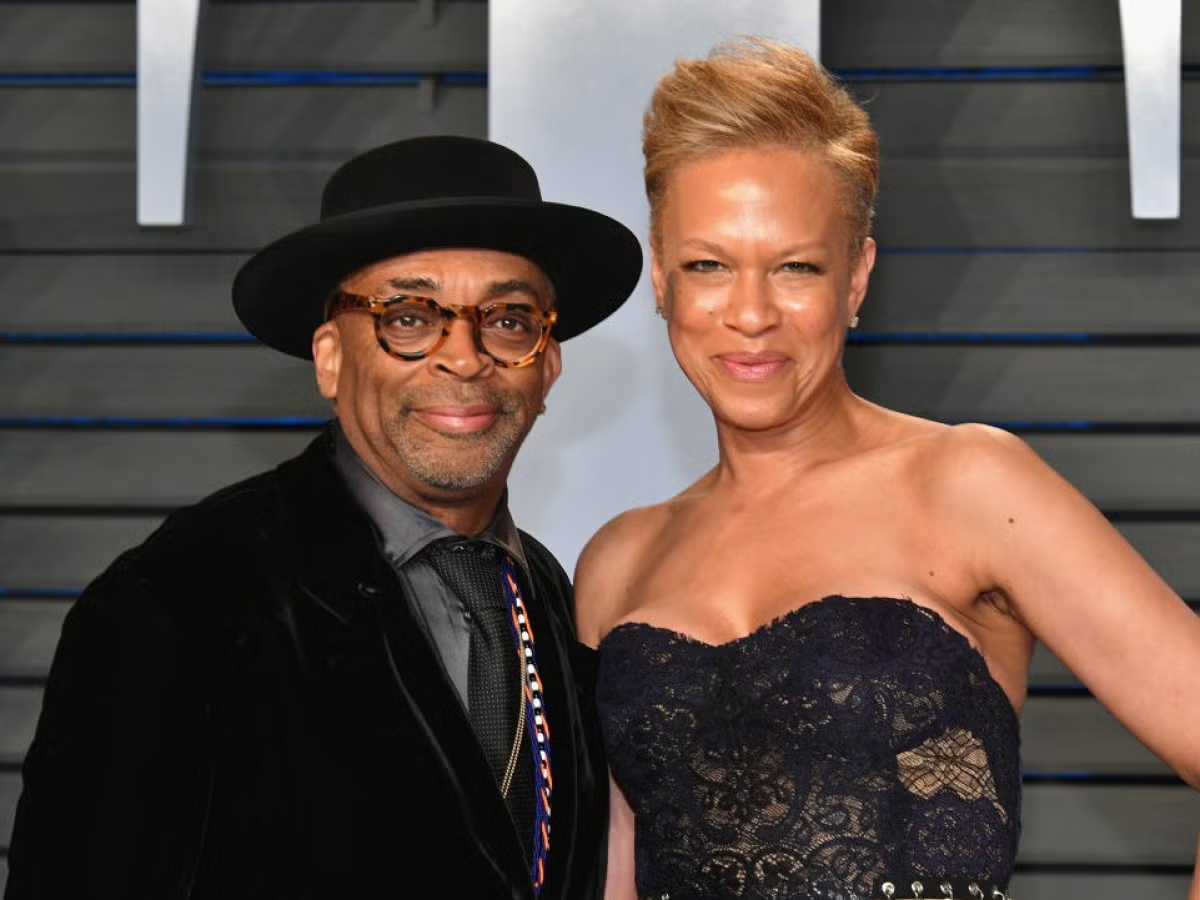
August 4, 2025 – Cotonou, Benin — In a move hailed as both symbolic and strategic, the Republic of Benin has officially appointed celebrated American filmmaker Spike Lee and his wife, accomplished producer and author Tonya Lewis Lee, as thematic ambassadors to African-Americans in the United States. The appointment, finalized during their recent visit to Benin’s economic capital, Cotonou, marks a significant step in the West African nation’s ongoing mission to reconnect with the global African diaspora.
The couple’s new role was confirmed during high-level meetings last week, and according to Benin’s Ministry of Culture, they are expected to serve as high-profile advocates for heritage reclamation, cultural exchange, and diaspora engagement. Their ambassadorship is part of a broader initiative aimed at strengthening historical, cultural, and spiritual ties between Benin and descendants of enslaved Africans across the globe.
Rebuilding Lost Connections
Benin’s government has, in recent years, launched several initiatives aimed at reconciling the nation’s past with its future. These efforts include promoting citizenship for African descendants, encouraging diaspora tourism, and restoring historical sites tied to the transatlantic slave trade. Officials hope that the appointment of the Lees—who both possess immense cultural influence and global recognition—will further these efforts by bringing international visibility to Benin’s efforts to become a cultural and ancestral homeland for millions of people of African descent.
In an official statement, the government said:
“Through their long-standing commitment to justice, their exceptional creativity, and their global reach, Mr. and Mrs. Lee have profoundly shaped the contemporary narrative of the African diaspora. Their ambassadorship symbolizes a renewed commitment to reconnect people of African descent around the world to their historical, cultural, and spiritual roots.”
While the Lees have yet to make a public statement regarding their appointment, reports from EASTERN FM 105.1 MHz NEWS ROOM indicate that the decision was well received during their visit, with locals and officials alike praising the initiative as a turning point in the country’s cultural diplomacy.
Cultural Tourism and Citizenship Reforms
Benin’s push to reestablish ties with the diaspora extends beyond symbolism. The country has taken concrete legislative steps, including the passage of a landmark law last year offering nationality to individuals who can trace their ancestry to enslaved Africans taken from the region.
In tandem with this, the government recently launched a digital platform enabling descendants of enslaved Africans to apply for Beninese citizenship. The platform serves as both a genealogical tool and a portal for legal recognition, marking one of the most ambitious diaspora engagement strategies in Africa.
Tonya Lewis Lee, who visited Benin previously, is reported to be among the first applicants to have received a favorable response under the new nationality program. Her personal involvement adds a deeply human element to the initiative and reinforces the message of reconnection, healing, and reclaiming lost identities.
A Legacy of Art and Advocacy
Spike Lee and Tonya Lewis Lee are no strangers to the themes of identity, justice, and African heritage. Spike Lee, known for his groundbreaking films such as Do the Right Thing, Malcolm X, and BlacKkKlansman, has long been a cultural voice for the African-American experience. His work often explores systemic racism, history, and the complexities of Black identity in America.
Tonya Lewis Lee has made her mark through both literature and television, and is widely recognized for her advocacy on health equity and social justice. Together, they bring decades of influence in American and global cultural circles—an asset that Benin’s government sees as invaluable in amplifying its message to the diaspora.
Spike Lee has previously revealed that DNA analysis traced his father’s lineage to Cameroon and his mother’s roots to Sierra Leone. While the specific country of origin for Tonya Lewis Lee has not been made public, her interest in heritage restoration is evident in her participation in Benin’s citizenship initiative.
Resonance Among Locals
On the streets of Cotonou, the appointment of the couple has sparked wide-ranging conversations about identity, heritage, and the role of cultural ambassadors. Many citizens, particularly young professionals and students, welcomed the move as an opportunity to elevate Benin’s image on the global stage.
Prospère Yehoume, a 27-year-old architecture student, shared his enthusiasm with EASTERN FM 105.1 MHz NEWS ROOM, calling the decision “a strong cultural message and powerful branding for Benin.”
Carlos Biogbé, a marketing executive, believes the involvement of high-profile Americans could position Benin as a desirable location for filmmakers and creatives. “This can create new industries, boost tourism, and spark collaborations in the arts. We’ve seen what Ghana did with the ‘Year of Return’—Benin has every reason to do even more,” he remarked.
However, some voices raised critical questions about representation. Basilia Hinvi, a secondary school student, praised the initiative but questioned why Benin-born Hollywood actor Djimon Hounsou was not similarly honored. “He’s one of our own, globally respected. It would be great to see his role more formally recognized,” she said.
A Past That Cannot Be Forgotten
Benin’s role in the transatlantic slave trade is historically significant and often painful. The country’s southern coast—once part of the so-called Slave Coast—was a key departure point for millions of enslaved Africans forcibly taken to the Americas. Between the late 16th and early 18th centuries, the Kingdom of Whydah, located along present-day Benin’s shoreline, is believed to have facilitated the export of over one million Africans to regions including the United States, the Caribbean, and Brazil.
In recent years, Benin has restored and preserved important monuments that reflect this history. Among them is the iconic “Door of No Return,” a beachside memorial arch symbolizing the final journey of those taken from the continent. These sites form the backbone of Benin’s cultural tourism strategy and serve as somber reminders of a shared past.
Looking Ahead
The appointment of Spike Lee and Tonya Lewis Lee as thematic ambassadors is more than a ceremonial gesture—it is a declaration of Benin’s intent to reassert its role in the global African consciousness. By blending advocacy, heritage, and diplomacy, Benin is crafting a narrative that seeks not only to honor its ancestors but to invite their descendants back home.
As this initiative gains momentum, the country is expected to unveil additional programs aimed at deepening diaspora engagement in education, investment, creative arts, and governance.
For millions across the African diaspora who are seeking belonging, identity, and spiritual reconnection, Benin is opening its arms. And with the Lees now acting as cultural envoys, the message may travel further than ever before.
STORY BY: KENNEDY AMPONSAH NTI
EASTERN FM 105.1 MHZ
NEWS ROOM