
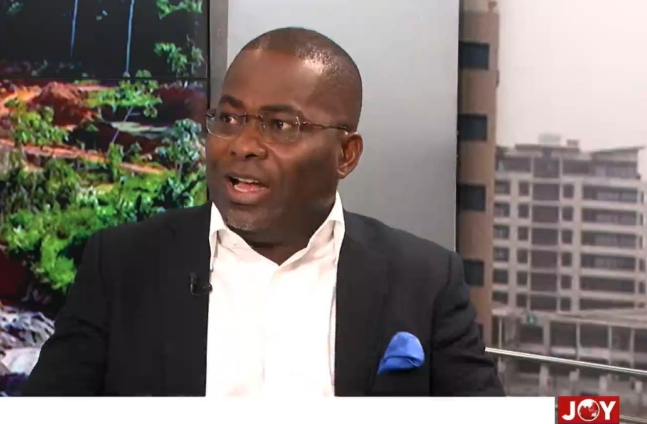
The High Court has scheduled July 2, 2025, for the commencement of the trial involving Charles Bissue, the former Secretary of the Inter-Ministerial Committee on Illegal Mining (IMCIM), who faces corruption-related charges tied to illegal mining activities.
At a recent Case Management Conference, the Office of the Special Prosecutor (OSP), which is prosecuting the case, confirmed that it had filed all required disclosures on May 28, 2025. The filings include two witness statements—one accompanied by five exhibits and the other by 12—along with 63 additional documents.
Lawyers for the accused acknowledged receiving the documents and requested original copies, which the court confirmed had already been provided. The court has set hearing dates for the prosecution’s witnesses to appear on July 2, 3, 8, 9, 15, 22, and 23. The case has been officially adjourned to July 2 for trial to begin.
Charles Bissue and one Andy Thomas Owusu have been charged with 15 counts of corruption-related offences. According to the charge sheet, the offences include abuse of public office for personal gain, contrary to Section 179C(a) of the Criminal Offences Act, 1960 (Act 29).
In one count, Bissue is accused of receiving GHC15,000 from a businessman, Bemanin Adjapong, through Andy Owusu in January 2019. The OSP alleges that Bissue accepted the bribe to circumvent established procedures in the IMCIM’s 2018 “Road Map for Lifting of Ban on Artisanal and Small-Scale Mining.” The procedures included verification of documents, proper permitting, concession mapping, and vetting of applicants.
By taking the payment, Bissue is alleged to have unlawfully fast-tracked the renewal of mining permits for certain operators, thereby undermining the government’s formal process to sanitize the small-scale mining sector.
The 15-count indictment paints a broader picture of abuse of office, corruption, and manipulation of mining regulations during Ghana’s high-profile crackdown on illegal mining, locally known as “galamsey.”
Travel guides
This case is seen as a critical test of the OSP’s resolve to prosecute high-level corruption, especially in cases related to environmental degradation and the exploitation of Ghana’s natural resources.