

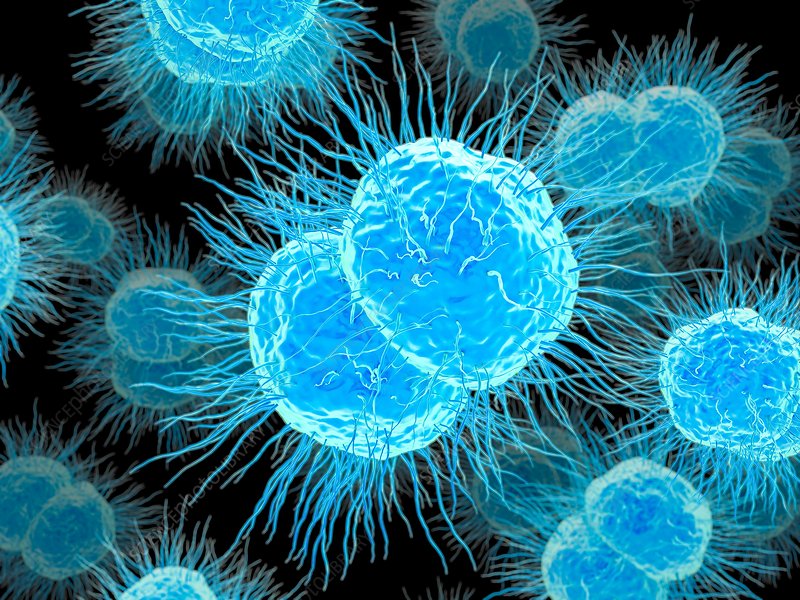
A groundbreaking study has revealed a protein that significantly enhances the virulence of Neisseria gonorrhoeae—the bacterium responsible for gonorrhoea—offering fresh hope for the development of new antibiotics and, potentially, an effective vaccine.
The research findings, published in PLOS Pathogens, and shared with EASTERN FM 105.1 MHZ, come at a critical time when gonorrhoea has earned the notorious label of a global “superbug.” The sexually transmitted infection has become increasingly resistant to all major classes of antibiotics, making treatment options dangerously limited.
A Global Health Crisis
Gonorrhoea is one of the world’s most widespread sexually transmitted diseases (STDs), with an estimated 78 million new cases recorded annually across the globe. When left untreated or inadequately managed, the infection poses serious health risks. Complications include endometritis, pelvic inflammatory disease, ectopic pregnancy, infertility, and epididymitis in men.
The disease also endangers newborns. Babies delivered by infected mothers face a heightened risk of blindness and other life-altering complications.
Alarmingly, gonorrhoea often spreads unnoticed. Dr. Aleksandra Sikora, lead researcher from Oregon State University (OSU), explained to EASTERN FM 105.1 MHZ:
“The infections very often are silent. Up to 50 percent of infected women don’t show any symptoms. Unfortunately, these asymptomatic cases can still result in devastating reproductive health problems, including miscarriage and premature delivery.”
This silent nature of infection, coupled with rising resistance to standard treatments, underscores the urgent need for new therapeutic solutions and a preventive vaccine.
The Discovery: A Protein Named SliC
The research was a collaboration between Dr. Sikora’s team at the OSU/OHSU College of Pharmacy and Professor Ann Jerse’s laboratory at the Uniformed Services University of the Health Sciences in Bethesda, Maryland. Their work uncovered a previously unidentified lipoprotein that plays a critical role in the bacteria’s ability to withstand the human immune system.
The protein, named SliC (Surface-exposed Lysozyme Inhibitor of C-type lysozyme), enables N. gonorrhoeae to neutralize one of the body’s most effective natural defense mechanisms—lysozymes.
Lysozymes are specialized enzymes that help protect the human body by breaking down bacterial cell walls, causing them to lyse, or burst. They are found in abundance in:
- Epithelial cells, which line the outer surfaces of organs and internal cavities.
- Phagocytic cells, a type of immune cell that engulfs and destroys harmful pathogens.
While many gram-negative bacteria have evolved mechanisms to resist lysozymes, prior to this study, scientists had only identified one lysozyme-fighting protein within the Neisseria genus.
The discovery of SliC changes that understanding dramatically.
Why This Matters
Now that SliC has been identified, it represents a promising target for future antibiotics and vaccine development. If scientists can inhibit SliC, they may be able to disarm the bacteria, reducing its ability to colonize and spread infection.
Dr. Sikora emphasized to EASTERN FM 105.1 MHZ:
“Our experiments demonstrate how critical the lysozyme inhibitor is for bacterial survival and infection. Blocking this protein could fundamentally change how we treat and prevent gonorrhoea.”
Evidence from Animal Models
The researchers went further by testing SliC in a gonorrhoea mouse model, a significant scientific milestone. Infected mice were examined at multiple time points—one, three, and five days after exposure—to determine SliC’s role in infection.
The results were conclusive: the presence of SliC was essential to bacterial colonization and survival, reinforcing its role as a primary virulence factor.
“This is the first time an animal model has been used to prove the role of a lysozyme inhibitor in gonorrhoea infections,” Dr. Sikora revealed. “Together, all of our experiments point to just how important this protein is. It is a very exciting discovery.”
The Road Ahead
With antibiotic resistance on the rise and reports of treatment failures worldwide, the discovery of SliC offers a critical new direction for researchers. It not only provides a novel drug target but also strengthens the case for developing a vaccine to curb the global spread of gonorrhoea.
For now, scientists and public health experts remain cautiously optimistic. If further studies confirm that blocking SliC weakens the bacteria’s ability to cause infection, the world could be one step closer to a much-needed breakthrough in the fight against this dangerous superbug.
STORY BY: KENNEDY AMPONSAH NTI
EASTERN FM 105.1 MHZ
NEWS ROOM