

Former Deputy Minister of State at the Presidency, Victoria Bright, has strongly defended the Ghana Tertiary Education Commission (GTEC) amid the ongoing national debate surrounding the use of academic titles.
Speaking on EASTERN FM 105.1MHz, the former government appointee under President Kufuor’s administration maintained that GTEC’s actions are neither politically motivated nor intended to target specific individuals. She stressed that the regulatory body is simply carrying out its mandate to safeguard the integrity of Ghana’s educational system.
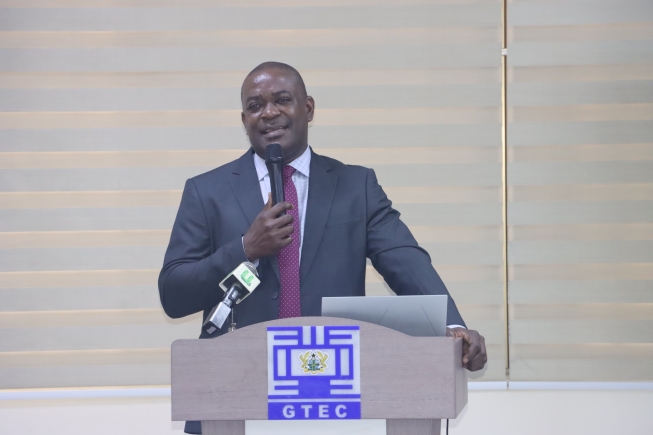
Her comments follow the recent standoff between GTEC and Deputy Minister of Health, Dr. Grace Ayensu-Danquah, regarding the latter’s use of the academic title “Professor.” The Director-General of GTEC, Professor Ahmed Abdulai Jinapor, has firmly rejected demands from Dr. Ayensu-Danquah’s legal team, emphasizing that her claims to the professorial title lack adequate documentation and clear evidence.
Addressing the issue, Ms. Bright criticized attempts to portray GTEC’s actions as a witch-hunt.
“What GTEC is doing is not a witch hunt. And I don’t understand why people are portraying it as such and calling themselves victims. How are you a victim? If you have the degree, just produce it—end of story,” she remarked on EASTERN FM 105.1MHz.
Protecting Credibility and National Reputation
Ms. Bright underscored that the matter transcends personal pride, stressing its direct impact on the credibility of Ghana’s education system and the country’s international reputation.
“It’s about protecting credibility, fairness, and our image as a nation. I do not understand why people are resisting this and attacking GTEC for simply doing its job. Their actions are legal and necessary. Undermining them undermines Ghana’s entire education system,” she explained.
The former Deputy Minister further warned about the dangers of allowing fraudulent academic claims to flourish, citing examples of individuals who have posed as professionals without the requisite qualifications.
The Dangers of Fake Credentials
According to her, fake credentials pose significant risks, particularly in sensitive professions such as medicine and education.
“We have had cases of fake doctors performing surgeries without any medical qualifications. Such individuals can literally cost lives. In education, unqualified persons claiming to be teachers put the future of children at risk. These practices jeopardize not just individuals but the progress of our entire nation,” Ms. Bright said in her interview with EASTERN FM 105.1MHz.
She emphasized that the culture of mediocrity and the tendency to attack regulatory institutions must end if Ghana is to move forward as a nation.
“We just have to stop celebrating mediocrity. This constant culture of attacking those who are trying to do the right thing has to stop. If we are serious about rebuilding and reshaping our country, then we must confront and eliminate anything that paints Ghana in a negative light. Enough is enough,” she declared passionately.
Call for Integrity and Accountability
Concluding her remarks, Ms. Bright issued a clear and firm message: academic and professional titles must only be used by those who have legitimately earned them.
“If you are not a doctor, don’t call yourself one. If you are not a lawyer, don’t claim to be. If you have not attained the rank of professor, you must not assume that title. These distinctions are earned through rigorous processes, and anyone who desires them should go through the proper channels,” she advised.
Ms. Bright’s statements on EASTERN FM 105.1MHz reflect growing public discourse on the integrity of academic qualifications in Ghana, highlighting the urgent need to protect standards and ensure that positions of influence are occupied by genuinely qualified individuals.
STORY BY KENNEDY AMPONSAH NTI
EASTERN FM 105.1 MHZ
NEWS ROOM