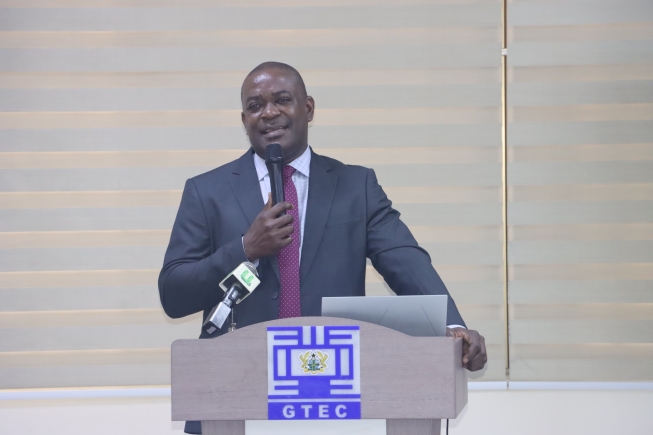


A renowned Ghanaian tax expert, Ismail Ibn Ibrahim, Esq., has made a passionate appeal to government to urgently revisit and reform the nation’s income tax framework, particularly the system of personal reliefs available to families. According to him, the current relief provisions fall far short of addressing the financial pressures on households, leaving marriages and family life increasingly vulnerable.
Speaking at the Marriage Governance Conference on August 19, 2025, Mr. Ibn Ibrahim, who also serves as an adjunct lecturer in Tax and Revenue Law at the GIMPA Law School, argued that financial strain—exacerbated by heavy taxation—has now become one of the leading causes of stress in modern marriages. In his view, issues of money management, and not just emotional or social challenges, are the most significant threats to marital stability today.
Delivering a presentation titled “Lower Taxes and Marriage Incentives: A Government Approach to Supporting Marriage and Family Life,” the lecturer observed that Ghana’s current Pay-As-You-Earn (PAYE) system burdens employees with an effective tax rate of no less than 20 percent of their income. While in principle the tax code provides for certain reliefs—such as deductions for dependent spouses, children, retirees, mortgage interest, and education-related expenses—Mr. Ibn Ibrahim stressed that the actual value of these allowances has remained stagnant for years.
In an economy experiencing persistent inflation, rising fuel prices, and escalating cost of living, these outdated reliefs no longer meet their intended purpose of cushioning families. Instead, households are forced to absorb more financial shocks, leaving little room for savings or long-term investments.
The problem, he continued, is worsened by Ghana’s complex system of indirect taxes on consumption. Ordinary families must grapple with:
- 15 percent Value Added Tax (VAT)
- 2.5 percent National Health Insurance Levy (NHIL)
- 2.5 percent GETFund Levy
- 1 percent COVID-19 Levy under the Standard VAT scheme
- 3 percent VAT plus COVID-19 Levy under the Flat Rate Scheme
These levies, all applied on daily goods and services, are virtually unavoidable. “The cumulative effect,” he noted, “is a steady erosion of disposable income. Families are taxed both directly on their salaries and indirectly on everything they consume.” This double burden, according to him, deepens financial insecurity and puts unnecessary strain on the very institution of marriage.
Proposed Reforms to Relieve Families
To address the growing pressures, Mr. Ibn Ibrahim outlined a number of recommendations he believes government should consider as part of a broader family-centered tax reform agenda:
- Regular Review of Personal Reliefs – Update reliefs periodically to reflect inflationary trends and current economic realities.
- VAT Exemptions on Childcare Essentials – Remove VAT from products like baby diapers, formula, and other basic needs critical for early childhood care.
- Exemptions for Family Gifts – Reinstate tax exemptions for gifts exchanged between spouses, children, and close relatives to encourage family support systems.
- Joint Filing for Married Couples – Allow couples to file taxes together, a system practiced in several countries, to promote fairness and minimize abuse of relief claims.
- Capital Gains Exemptions on Family Transfers – Restore exemptions on intra-family transfers of assets, such as inheritance and property passed between close relatives.
- Expansion of Relief Categories – Introduce new reliefs such as Rent Relief, Disabled Child Relief, and Nominal Transportation Relief to ease everyday household burdens.
Marriage as a Public Good
Mr. Ibn Ibrahim emphasized that marriage and family life should be recognized as public goods, with direct social and economic benefits to the nation. He stressed that when families are financially stable, society as a whole benefits through lower social intervention costs, healthier children, and more resilient communities.
He also challenged policymakers to move beyond viewing tax reforms as merely fiscal tools, and instead to consider their wider social implications. “Every tax decision has a human face,” he explained. “Behind the figures are families struggling to raise children, couples trying to stay together, and communities depending on stable households.”
Conference Message
The Marriage Governance Conference, which brought together legal experts, clergy, marriage counselors, and policymakers, concluded with a strong consensus that meaningful tax reform is both an economic necessity and a social imperative. Participants agreed that without targeted relief for households, the government risks undermining the very foundation of Ghanaian society—the family unit.
EASTERN FM 105.1 MHZ will continue to track the debate on tax policy and family welfare, providing timely updates and in-depth analysis for its listeners across the Eastern Region and beyond.
STORY BY: KENNEDY AMPONSAH NTI
EASTERN FM 105.1 MHZ
NEWS ROOM